
Agenda
° Septembre/Octobre 2026 : 4 Ateliers de formation » Logement à Bruxelles : les clés juridiques pour agir » avec Nicolas Bernard (UCL Saint-Louis) . Réservé aux membres.
° 15/10 : Webinaire du Logement – Agence Immobilière Solidaire : de l’étude à l’expérimentation (12h-14h). Avec SoHab et le Fonds du Logement. Inscriptions ici.
° 12/11 : Webinaire du Logement – Plan Européen du Logement Abordable (12-14h). Avec la Commission Européenne et Bruxelles Logement. Save the date.
° 19/11 : Apéro du Logement – Conversion de bureaux et logement abordable (10-12h). Inauguration du projet Pavillon d’Inclusio & séminaire sur les pistes pratiques de conversion de bureaux en logements abordables (10h-12h). Save the date.
Publications SoHoNet
Des aides publiques à la hauteur des enjeux de rénovation à Bruxelles (March 2026)
Note de cadrage Social _Reno_Deal (June 2024)
Mémorandum(Edition 2024)
Étude Housing Deal (2022-2023)
Carte blanche : Encadrement de la croissance des AIS à Bruxelles (2020)
Portfolio des acteurs bruxellois du logement (Edition 2019)
Mémorandum (Edition 2019)
Press
Petit déjeuner ‘L’accès au logement neuf en débat’ du Soir Immo
Article published in October 2026
Article Trends Tendance ‘Sans finances, le logement public en appelle au privé’
Article published in July 2026
Article Trends Tendance ‘Les primes à la rénovation de retour dès 2027 ? Comment Bruxelles veut tirer profit du Fonds social climat européen’
Article published in July 2026
Carte blanche La Libre ‘Le logement bruxellois nécessite une politique énergétique plus sociale’ signée par SoHoNet
Article published in July 2025
L’entretien ‘Il faut rénover et augmenter la production de logements abordables à Bruxelles’ Le Soir Immo
Article published in June 2025
Table ronde ‘Logement, quelles voies d’accès’ La Libre Immo
Article published in April 2025
Article RTBF : Production de logement abordable à Bruxelles : sans les primes Renolution, les opérateurs sont démunis
Article published in February 2025
Communiqué de presse SoHoNet Social Réno Deal
Article published in September 2024
Article La Libre Immo ‘Les opérateurs du logement à vocation sociale déplorent l’arrêt des primes Renolution (septembre 2024)
Article published in September 2024
Article Démocratie ‘Un Housing Deal, pour un habitat social, anti-spéculatif et émancipateur‘
Article published in May 2024

Our latest events
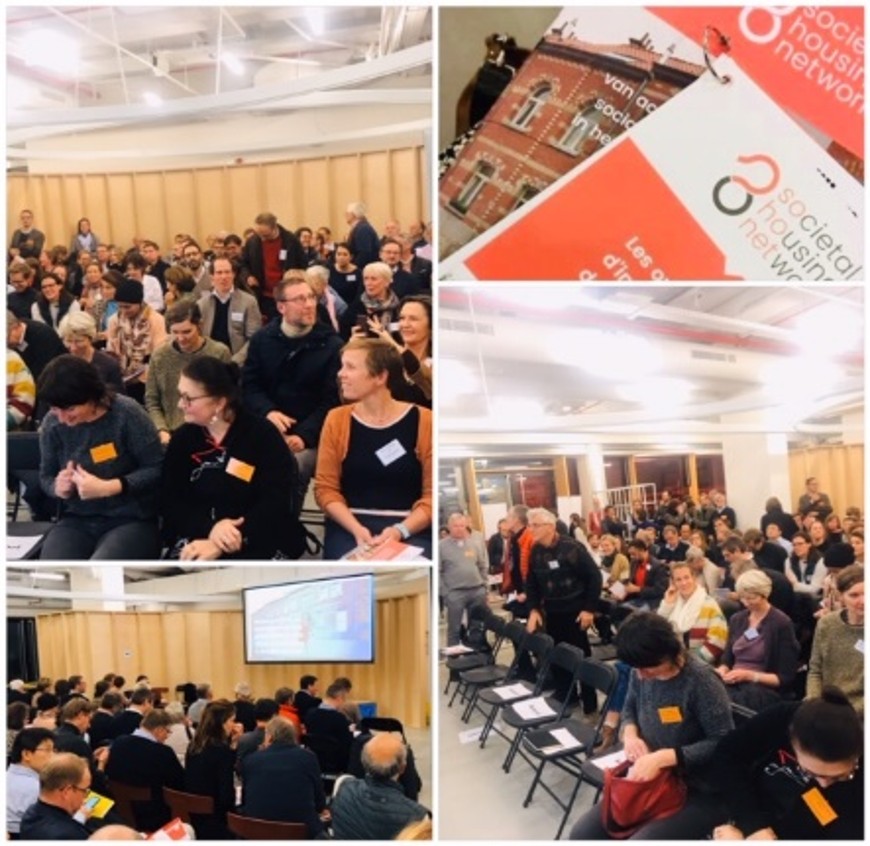
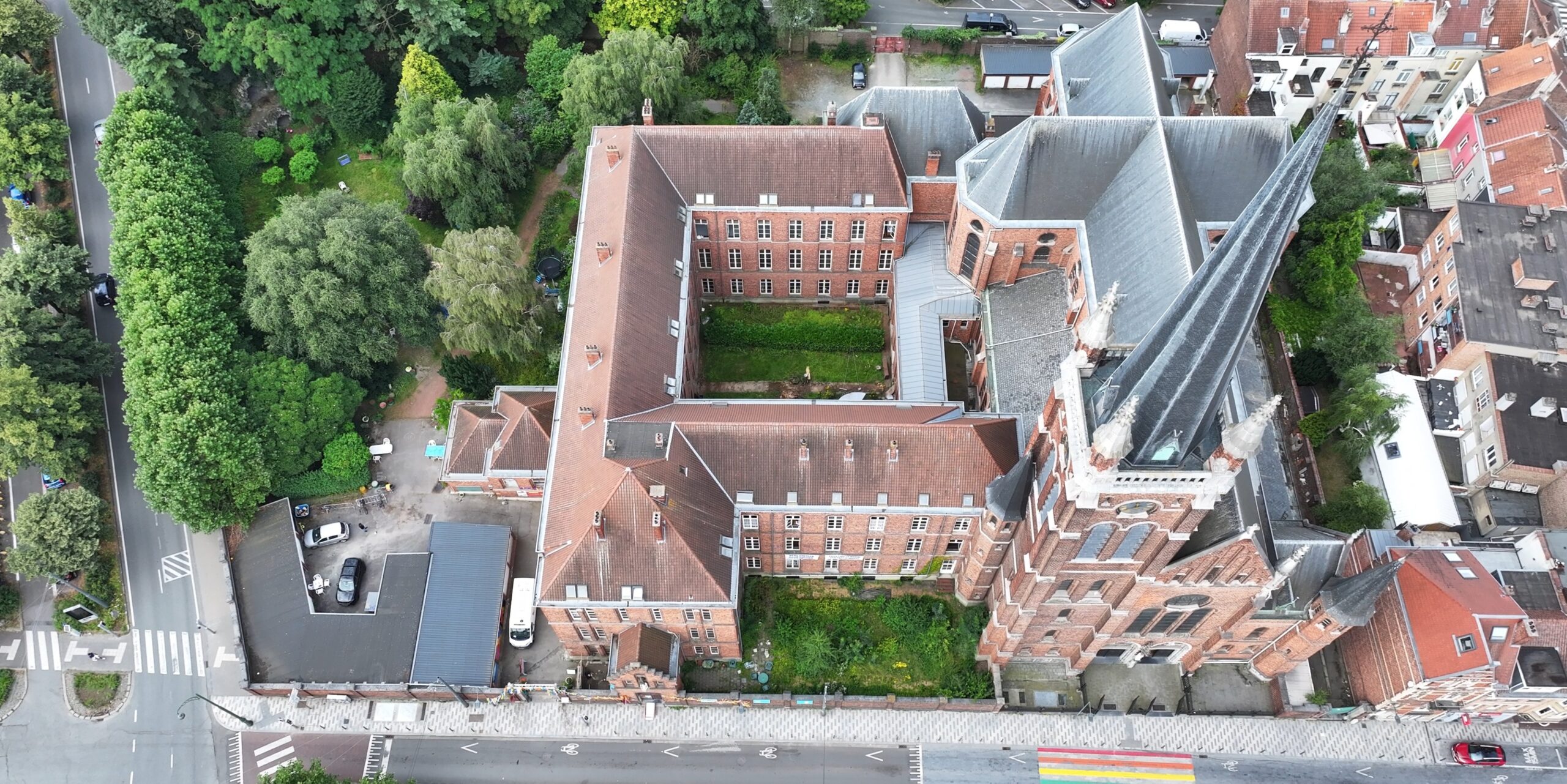
Looking Back at Our Housing Apéro at the Jette Convent Project (18/05/2026)
Our Annual General Meeting on 18 May was followed by a Housing Apéro, providing an opportunity to discover the project to transform the convent in Jette into affordable housing.
– Bie Vancraeynest (Toestand) presented the Mona project and explained her non-profit organisation’s work through temporary occupancy.
– Benoît Velge (Arcatim) discussed the technical, financial and heritage-related challenges involved in redeveloping the site.
– Alexis Picavet (SoHab) presented their solidarity-based real estate agency (AISOL) approach and the concept of “fair rent”.
The evening concluded with a friendly networking drink, giving participants the opportunity to meet one another and exchange ideas on the levers for transforming these unique buildings into a mixed-use project that includes socially oriented housing.
Highlights from the workshop: support and partnerships between social rental agencies and housing operators (09/12/2025)
In December, SoHoNet brought together non-profit organizations, social rental agencies, and housing operators to discuss resident support for vulnerable groups and partnerships between social services and housing managers. Drawing on feedback from the Bara, Village Sainte-Anne, and Maison Deleuze projects, discussions highlighted the importance of building partnerships between stakeholders from the earliest project design stages. Panel participants also stressed the need to secure long-term funding for resident support, a key condition for the success of these models. particularly in a context where achieving financial viability for affordable housing projects is becoming increasingly challenging.
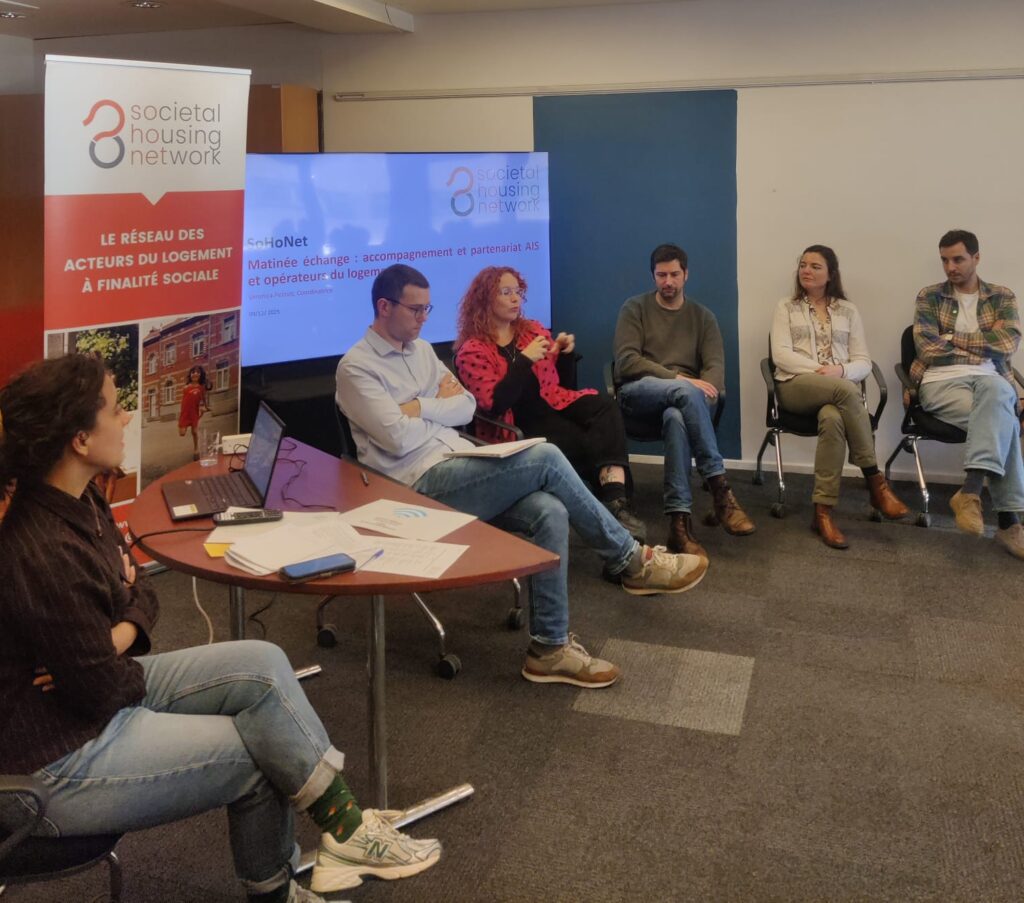
The Housing Deal was identified as a promising pathway to integrate these issues into project development and strengthen collaboration dynamics among stakeholders. As several speakers noted during the morning, participation in SoHoNet events represents a first step in this direction.
Our housing webinars
Review of our webinar ” Affordable housing production: current situation and future prospects” (02/07/26).
Last July, Housing Webinar #24 focused on the challenges related to the production of public and affordable housing. In the first part, Yves Van de Casteele (Brussels Housing Officer for the Brussels-Capital Region) presented the 8th Housing Monitoring Report in detail. Boris Feron (Housing Adviser to the Office of Secretary of State Karine Lalieux) then examined the challenges, both in terms of spatial considerations and housing production.
Our recent webinars :
– #22 « Réforme des certificats PEB et réflexion sur le modèle de la performance énergétique des bâtiments » Avec Isabelle Rolin (Bruxelles Environnement) – Quentin Lancrenon & Perrine Wohlfrom (Les Shifters Belgium)
– #23 « La division du bâti résidentiel comme piste de création de logements abordables à Bruxelles » – Eva Joskin(Canopea) & Marion Alecian (ARAU)